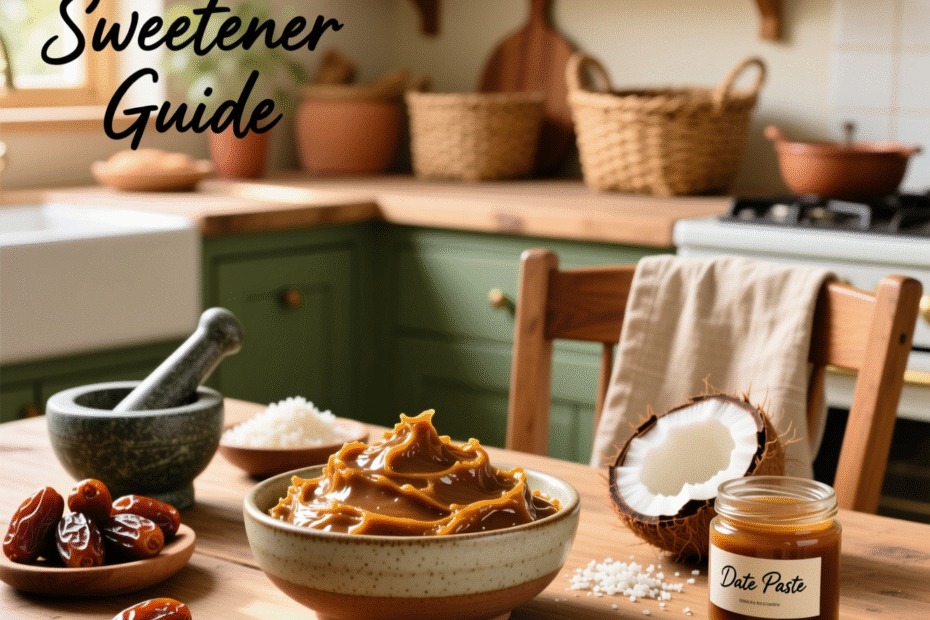
Have you ever dreamed of baking something sweet that’s both delicious and guilt-free? What if you could replace refined sugar with a wholesome, fiber-rich alternative that doesn’t sacrifice flavor—or even enhances it? Enter date paste: nature’s caramel in a jar, ready to transform your baked goods from ordinary to extraordinary.
In today’s world—where more people are rethinking processed sugars and seeking cleaner ingredients—date paste has quietly become a kitchen staple for health-conscious bakers. But it’s not just a trend. Made from one simple ingredient (dates!) and water, this natural sweetener brings depth, moisture, and subtle caramel notes to everything from brownies to banana bread.
In this guide, we’ll explore why date paste is a game-changer, how to make and store it, how to substitute it in recipes, and creative ways to use it beyond baking. Whether you’re a seasoned home baker or just starting your wellness journey, this article will equip you with practical tips to sweeten your treats the natural way—without compromise.
Let’s dive in and discover how a humble fruit can revolutionize your oven adventures.
Why Date Paste Is the Ultimate Natural Sweetener
Not all sweeteners are created equal—and when it comes to baking, your choice of sugar can dramatically affect flavor, texture, and nutrition. Refined white sugar delivers sweetness, but little else. Date paste, on the other hand, offers natural sugars (fructose and glucose), fiber, potassium, magnesium, and antioxidants, all while keeping things real—no lab, no additives.
Dates have been used as a sweetener for thousands of years across the Middle East and North Africa, long before refined sugar existed. Their natural stickiness and rich, molasses-like flavor make them ideal for binding and sweetening baked goods. Unlike artificial sweeteners or even honey or maple syrup, date paste brings bulk and moisture, which helps replicate the structure that sugar normally provides in cakes, muffins, and cookies.
And here’s a bonus: because date paste contains fiber, it leads to a slower release of sugar into your bloodstream, avoiding the sharp spikes and crashes associated with refined sugar. That means more stable energy—and fewer afternoon slumps after your snack.
For anyone looking to reduce processed sugars without sacrificing indulgence, date paste isn’t just an alternative—it’s an upgrade.
How to Make (and Store) Date Paste at Home
The best part? You can make date paste in under 10 minutes with just two ingredients: pitted dates and water. No fancy equipment needed—just a blender or food processor.
Start with Medjool dates—they’re soft, sweet, and blend beautifully. If your dates are dry or firm, soak them in warm water for 10–15 minutes first. Then, blend 1 cup of pitted dates with ½ to ¾ cup of warm water (adjust based on desired thickness) until smooth and glossy. That’s it! You now have a versatile, shelf-stable sweetener ready for action.
Store your date paste in an airtight container in the refrigerator for up to 3–4 weeks, or freeze it in ice cube trays for longer-term use. Each cube equals about 1–2 tablespoons—perfect for portioning into recipes.
This DIY approach saves money compared to store-bought versions (which can be pricey) and ensures zero preservatives or hidden sugars. Plus, making it yourself means you control the consistency: thicker for cookie doughs, thinner for glazes or smoothies.
Once you have a jar in your fridge, you’ll find yourself reaching for it again and again—not just for baking, but for oatmeal, yogurt, energy balls, and even savory sauces. It’s the Swiss Army knife of natural sweeteners.
Swapping Sugar for Date Paste: A Practical Guide
Now, the million-dollar question: Can I really replace sugar with date paste in my favorite recipes? The short answer: yes—but with a few smart adjustments.
Unlike granulated sugar, date paste adds moisture, so a 1:1 swap isn’t always ideal. A good rule of thumb: replace up to half the sugar in a recipe with date paste to start. For every ½ cup of date paste used, reduce other liquids (like milk, oil, or eggs) by 2–3 tablespoons to maintain the right batter consistency.
Date paste works especially well in dense, moist baked goods: banana bread, brownies, muffins, and spice cakes. It’s less ideal for delicate recipes like angel food cake or shortbread, where structure relies heavily on dry sugar.
Pro tip: mix date paste with a bit of nut butter or melted coconut oil before adding to batter—this helps it incorporate more evenly and prevents clumping.
And don’t worry about losing sweetness—dates are naturally sweeter than table sugar by volume, so a little goes a long way. Many bakers find their treats taste richer and more complex, with notes of caramel and fig that refined sugar simply can’t replicate.
With a bit of experimentation, you’ll find your perfect balance—and likely never go back to plain sugar again.
Beyond the Oven: Creative Ways to Use Date Paste
While baking is where date paste shines brightest, its uses stretch far beyond the mixing bowl. Think of it as your secret weapon for wholesome, everyday sweetness.
Stir a spoonful into your morning oatmeal or chia pudding for instant richness. Blend it into smoothies instead of honey or agave—it adds creaminess and fiber. Use it as a natural binder in no-bake energy bars or protein balls, combining with oats, nuts, seeds, and a pinch of sea salt for a satisfying snack.
In savory cooking, date paste adds depth to marinades, glazes, and salad dressings. Try whisking it with soy sauce, ginger, and garlic for a sticky-sweet tofu or chicken glaze. Or mix it into hummus or baba ganoush for a subtle sweetness that balances the tang.
Even your beverages can benefit: swirl it into hot cocoa, golden milk, or homemade nut milk for a naturally sweetened sip.
Because it’s minimally processed and packed with nutrients, date paste aligns perfectly with clean-eating, plant-based, or gut-friendly diets—without feeling restrictive. It’s proof that “healthy” and “delicious” aren’t oppositives; they’re partners.
The Bigger Picture: Baking with Intention
Choosing date paste over refined sugar isn’t just about cutting calories—it’s about baking with intention. It’s a small act of care: for your body, your family, and the planet. Dates require far less processing than white sugar, and their cultivation (when done sustainably) supports arid-region ecosystems where few other crops thrive.
More than that, baking with whole-food ingredients reconnects us to the joy of simple, honest cooking. In a world of ultra-processed convenience, whipping up a batch of date-sweetened muffins becomes a quiet rebellion—a way to slow down, savor, and nourish.
And let’s be honest: your kitchen smells incredible when dates are in the mix. That warm, caramelized aroma? It’s the scent of comfort, crafted with purpose.
So whether you’re reducing sugar for health, exploring plant-based baking, or simply curious about cleaner alternatives, date paste invites you to bake differently—and better.
Conclusion: Seeten Life, Naturally
We’ve covered a lot of ground: from the nutritional and culinary benefits of date paste, to how to make it at home, substitute it in recipes, and use it creatively beyond baking. What ties it all together is a simple truth—you don’t have to choose between health and happiness in your kitchen. Date paste proves that the sweetest things in life can also be the most wholesome.
If you’ve been hesitant to ditch refined sugar, consider this your gentle nudge. Start small—swap it into your next batch of banana bread or stir it into your morning smoothie. Notice the difference in flavor, texture, and how you feel afterward. Chances are, you’ll be hooked.
So go ahead: grab some dates, fire up your blender, and sweeten your world the natural way. Your taste buds—and your body—will thank you.
Have you tried baking with date paste? What’s your favorite recipe? Share your creations or questions in the comments below—we’d love to hear from you!

Thayná Alves is an influential digital content creator who has carved out a significant space in the realms of technology, finance, and entrepreneurship. Through her blog, Newbacker.com , she stands out as an authentic and accessible voice for individuals seeking practical information about investments, innovation, and emerging trends in the financial market.