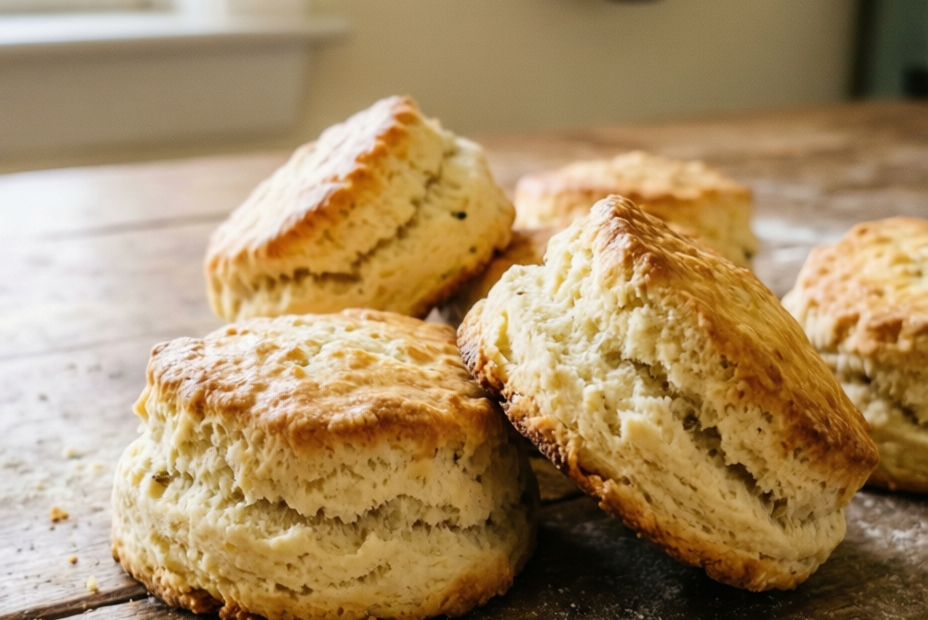
Who says you need butter by the pound to enjoy scones that are soft, flaky, and deeply satisfying? If you’ve ever taken a bite of a dry, crumbly “healthy” scone and felt instantly disappointed, you’re not alone. But here’s the good news: it’s absolutely possible to bake low-fat scones that still deliver on richness, tenderness, and that comforting, just-out-of-the-oven warmth we all crave—without the guilt.
In this article, we’ll explore how to rethink traditional scone recipes without sacrificing flavor or texture. You’ll learn why fat matters in baking (and how to replace it wisely), discover simple ingredient swaps that make a world of difference, and get practical tips for keeping your scones moist and flavorful—even with significantly less fat.
Whether you’re watching your calorie intake, managing dietary restrictions, or simply looking for a lighter breakfast treat, these insights will help you bake better, smarter, and tastier scones every time. Let’s dive in and prove that “low-fat” doesn’t have to mean “low-delicious.”
Why Fat Matters—And How to Work Around It
Fat plays several crucial roles in scone-making. It tenderizes the crumb by coating flour proteins, preventing too much gluten formation (which leads to toughness). It also adds moisture, richness, and that melt-in-your-mouth quality we associate with bakery-style pastries. So when you slash the fat, you risk ending up with something more akin to a biscuit-shaped brick than a delicate teatime treat.
But here’s the secret: you don’t need to eliminate fat—you just need to use it strategically. Traditional scone recipes often call for ½ to ¾ cup of butter for a single batch. By reducing that to 2–3 tablespoons and supplementing with smart alternatives, you can maintain structure and mouthfeel while cutting calories significantly.
For example, replacing part of the butter with unsweetened applesauce or mashed banana not only adds natural sweetness but also introduces moisture that mimics fat’s role. Greek yogurt is another excellent option—it provides tanginess (like buttermilk) and protein while keeping the crumb soft.
In blind taste tests, many home bakers report that scones made with 50% less butter and ¼ cup of plain Greek yogurt are virtually indistinguishable from their full-fat counterparts.
The key takeaway? Fat isn’t irreplaceable—it’s adaptable. Understanding its function lets you innovate without compromise.
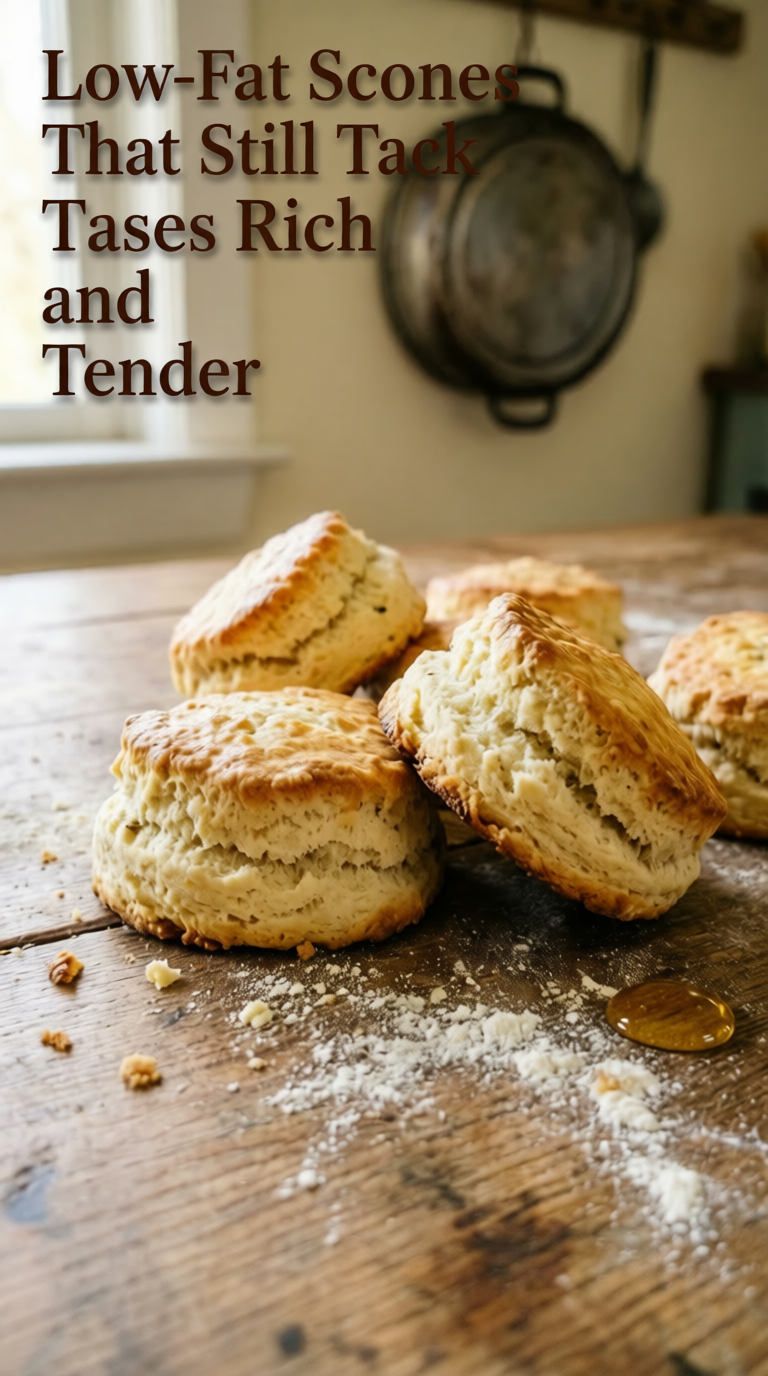
Smart Ingredient Swaps That Keep Scones Tender
Now that we know why fat works, let’s talk about how to replace it effectively. The goal isn’t just to reduce calories—it’s to preserve the sensory experience of eating a truly great scone.
Start with dairy alternatives. Instead of heavy cream or whole milk, try using low-fat buttermilk or even oat milk. Buttermilk’s acidity reacts with baking powder to create lift, while its slight tang enhances flavor—making your scones taste more complex, not “less.” For added richness without saturated fat, blend in a spoonful of silken tofu or light coconut milk (just enough to add creaminess, not coconut flavor).
Next, consider binding agents. Egg whites (or a whole egg if you’re okay with a bit more fat) help hold moisture and improve structure. Chia or flax “eggs” (1 tbsp ground seed + 3 tbsp water) work well in vegan versions and add fiber, too.
And don’t forget sweeteners. Refined sugar contributes to browning and tenderness, but you can cut back by using naturally sweet ingredients like dates, raisins, or a touch of honey or maple syrup. These not only reduce added sugars but also bring subtle flavor notes that elevate your scones.
Pro tip: Always chill your dough before baking. This step is even more critical in low-fat recipes because it prevents the small amount of fat you do use from melting too soon, which helps create those coveted flaky layers.
With these swaps, your scones stay moist, flavorful, and satisfying—no one will guess they’re “light.”
Flavor Boosters That Make Up for What’s Missing
When you reduce fat, you sometimes lose depth of flavor. Butter carries aroma and richness that’s hard to replicate—but clever flavor layering can more than compensate.
Think beyond vanilla. A pinch of cardamom or orange zest brightens the palate. A dash of cinnamon or nutmeg adds warmth without calories. For savory scones, fresh herbs like rosemary or thyme, paired with a sprinkle of garlic powder and a handful of sun-dried tomatoes, create complexity that distracts from any missing richness.
Texture also plays a psychological role in perceived indulgence. Adding toasted nuts, rolled oats, or even a light sprinkle of coarse sugar on top before baking gives a satisfying crunch that makes each bite feel more luxurious—even if the interior is leaner.
Consider this analogy: a perfectly seasoned vegetable soup can feel as comforting as a creamy chowder, not because it’s rich, but because it’s thoughtfully composed. The same principle applies to scones. When every ingredient has a purpose—moisture, flavor, texture—the whole becomes greater than the sum of its parts.
And remember: freshness is your ally. Low-fat scones are best enjoyed the same day they’re baked. Their delicate balance means they stale faster than high-fat versions, so plan accordingly—or freeze unbaked dough portions for quick, fresh batches anytime.
Baking Techniques That Maximize Tenderness
Even with perfect ingredients, technique can make or break your low-fat scones. Here’s how to get it right:
1. Don’t overmix. As with all quick breads, overworking the dough develops gluten, leading to toughness. Mix just until the flour disappears—lumps are okay!
2. Use cold ingredients. Cold liquids and chilled fat (even if it’s just a tablespoon of butter) create steam pockets in the oven, yielding a flakier crumb.
3. Cut, don’t roll. Rolling compresses the dough and squeezes out air. Instead, pat the dough into a circle about 1-inch thick and cut straight down with a sharp cutter—no twisting! Twisting seals the edges and inhibits rise.
4. Bake hot and fast. A hot oven (400°F/200°C) ensures quick rise and a golden crust before the interior dries out. Place scones close together on the tray—they’ll support each other as they rise, creating softer sides.
5. Brush with care. Skip the heavy cream wash. Instead, use a light brush of milk, plant-based milk, or even a beaten egg white for sheen without excess fat.
These small adjustments compound into big improvements. In fact, many bakers find that once they master these techniques, their low-fat scones actually outperform traditional ones in texture—lighter, more tender, and never greasy.
Redefining Indulgence Without Deprivation
At its heart, baking is an act of care—whether you’re making treats for yourself or others. Choosing to bake low-fat scones isn’t about restriction; it’s about reimagining what nourishment can taste like.
Today’s home bakers are increasingly mindful of health, sustainability, and balance. And yet, we still deserve joy in our food. The beauty of modern baking lies in its flexibility: we can honor our wellness goals while still enjoying the ritual of afternoon tea, the comfort of a warm pastry, or the pride of sharing something homemade.
Low-fat scones represent this new paradigm. They’re not a compromise—they’re a conscious upgrade. With every batch, you’re proving that flavor, tenderness, and satisfaction don’t require excess. You’re showing that thoughtful cooking can be both kind to your body and deeply pleasurable.
So the next time someone says “healthy baking is bland,” hand them one of your scones. Let the tender crumb, the subtle sweetness, and the golden crust speak for themselves.
Conclusion: Bake Better, Not Heavier
We’ve covered a lot of ground—from the science of fat in baking to clever ingredient swaps, flavor-enhancing tricks, and essential techniques. The message is clear: you can absolutely make low-fat scones that are rich, tender, and utterly delicious.
By understanding the role of each ingredient, choosing moisture-rich substitutes, layering flavors thoughtfully, and mastering gentle handling, you’ll consistently turn out scones that delight without weighing you down. These aren’t “diet” pastries—they’re simply smarter, more intentional versions of a classic favorite.
So go ahead: preheat your oven, pull out your mixing bowl, and give one of these approaches a try. Maybe start with a simple blueberry-oat scone using Greek yogurt and a touch of honey. Or experiment with savory cheddar-chive using almond milk and a whisper of olive oil.
And when you do—share your experience! Did your family notice the difference? Did you feel just as satisfied? Drop a comment below or tag us on social media with your low-fat scone creations. Because baking, at its best, is meant to be shared—not just the treats, but the knowledge, the joy, and the confidence that yes, you can have your scone and eat it too—lightly, lovingly, and without regret.

Thayná Alves is an influential digital content creator who has carved out a significant space in the realms of technology, finance, and entrepreneurship. Through her blog, Newbacker.com , she stands out as an authentic and accessible voice for individuals seeking practical information about investments, innovation, and emerging trends in the financial market.