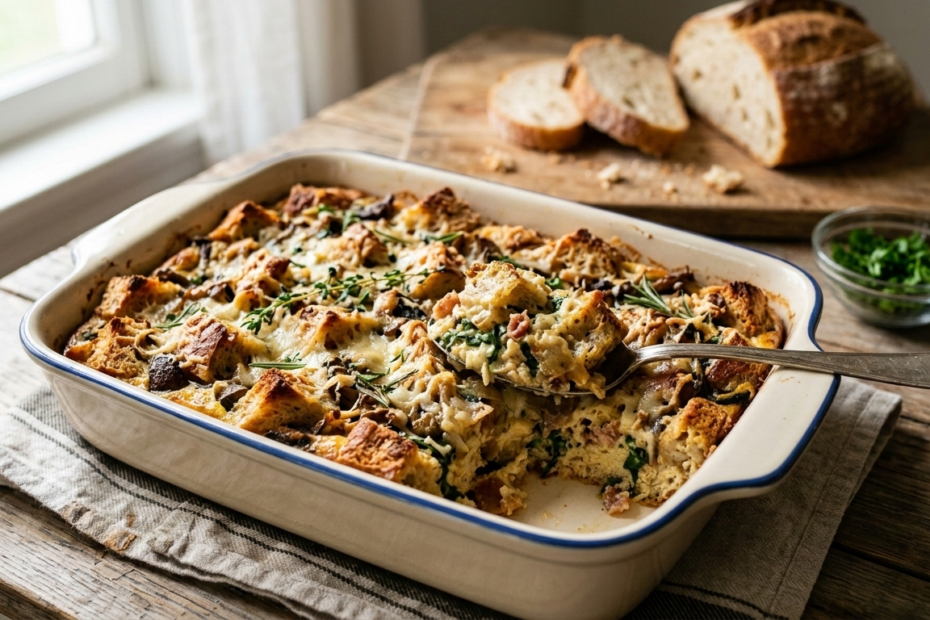
That lonely, crusty baguette sitting on your counter isn’t a kitchen failure; it’s actually the secret ingredient to the most luxurious dinner you haven’t made yet. While most people associate bread pudding with cinnamon, raisins, and sweet custard, its savory cousin is the unsung hero of home cooking.
In this article, we are going to explore the art of transforming “past-its-prime” bread into a gourmet savory masterpiece. We will dive into why stale bread is technically superior to fresh, how to balance flavors like a pro, and why this dish is the ultimate solution for reducing food waste while impressing your guests.
Whether you are looking for a cozy weeknight meal or a show-stopping brunch side, learning to master savory bread pudding will change the way you look at your bakery leftovers forever. Let’s get cooking!
1. The Science of Stale: Why Old Bread is Better
It might sound counterintuitive, but fresh bread is actually the enemy of a great savory pudding. When bread is fresh, its cells are full of moisture. If you soak fresh bread in a custard of eggs and cream, it becomes mushy and loses its structure, resulting in a soggy mess that lacks character.
Day-old bread, however, has undergone a process called starch retrogradation. As it loses moisture, the bread becomes porous, like a dry sponge waiting to be filled. When you pour your savory custard over dried-out cubes, they drink up the liquid while maintaining their shape. This creates a beautiful contrast between a creamy interior and a golden, toasted top.
Think of it this way: a fresh slice of bread is already “full.” A stale slice is “hungry.” By using day-old bread, you are allowing the flavors of garlic, herbs, and cheese to penetrate deep into the heart of the loaf, rather than just sitting on the surface.
2. Crafting the Perfect Savory Custard Base
The soul of any savory bread pudding lies in the custard. Unlike sweet versions that rely on sugar and vanilla, savory puddings thrive on a balance of rich fats and aromatic seasonings. The standard ratio usually involves a mix of whole eggs, heavy cream, and whole milk to ensure a silky texture that isn’t too heavy.
To elevate your base, consider the “flavor layering” technique. Instead of just adding salt, try whisking in a tablespoon of Dijon mustard, a pinch of nutmeg, or even a splash of Worcestershire sauce. These small additions provide a background depth that makes people ask, “What is that wonderful flavor?”
Pro-Tip: Don’t skimp on the fat. Using low-fat milk can lead to a watery pudding. If you want that melt-in-your-mouth experience, stick to full-fat dairy. This richness acts as the perfect canvas for the bold ingredients we’ll discuss in the next section.
3. Mix-Ins: A Symphony of Texture and Flavor
If the bread is the bones and the custard is the soul, the mix-ins are the personality of your dish. This is where you can get truly creative. Imagine a classic combination like sautéed leeks, crispy pancetta, and Gruyère cheese—it’s like a sophisticated quiche but with a much more satisfying texture.
Using mix-ins is a bit like composing a song; you need high notes (acidity/brightness), mid-tones (savory proteins), and bass notes (earthy vegetables).
-
For brightness: Use sundried tomatoes, scallions, or lemon zest.
-
For heartiness: Try Italian sausage, roasted mushrooms, or caramelized onions.
-
For the “melt” factor: Sharp cheddar, goat cheese, or fontina are excellent choices.
A great tip is to always cook your vegetables before adding them to the bread. Raw vegetables release moisture during baking, which can throw off your custard ratio. Sautéing your mushrooms or spinach first ensures that every bite is concentrated and flavorful, moving us perfectly into how to assemble this masterpiece.
4. The Assembly Line: Step-by-Step Success
The secret to a world-class savory bread pudding isn’t just what you put in it, but how you put it together. You want to avoid “layering” like a lasagna. Instead, toss your bread cubes and mix-ins together in a large bowl first. This ensures that every forkful has a bit of everything.
Once you’ve tossed your dry ingredients, transfer them to a buttered baking dish. Pour the custard over the top slowly, pressing down with a spatula to make sure the bread is fully submerged. The most important step is the wait. Let the dish sit for at least 30 minutes (or even overnight in the fridge) before putting it in the oven.
| Step | Action | Why it matters |
| 1. Toasting | Dry bread in a low oven if it’s not stale enough. | Ensures maximum absorption. |
| 2. Folding | Mix bread and fillings before adding liquid. | Even distribution of flavor. |
| 3. Soaking | Let it rest for 30+ minutes. | Prevents dry pockets in the pudding. |
| 4. Baking | Cover with foil for half the time, then uncover. | Creamy inside, crunchy outside. |
5. From “Leftovers” to “Culinary Inspiration”
There is something deeply satisfying about taking a literal scrap of food—a hardened heel of bread—and turning it into a dish that brings people together. Savory bread pudding is more than just a recipe; it’s a philosophy of cooking that values resourcefulness and flavor over expensive, “perfect” ingredients.
In many cultures, “peasant food” is considered the most delicious because it relies on slow cooking and smart seasoning to make simple ingredients shine. When you pull a bubbling, golden-brown savory pudding out of the oven, you aren’t just serving dinner; you are participating in a long tradition of kitchen wisdom.
As you become more comfortable with the ratios, you’ll find yourself looking at all kinds of leftovers differently. That half-bag of spinach? The two slices of bacon from breakfast? They all have a home in your next savory creation. This mindset not only saves money but sparks a level of kitchen creativity that makes cooking feel like a joy rather than a chore.
Conclusion
We’ve traveled from the science of stale starch to the artistic layering of cheeses and herbs. Savory bread pudding is truly the ultimate “upcycling” project for your kitchen. By understanding the importance of dry bread, the richness of a well-seasoned custard, and the power of pre-cooked mix-ins, you can create a meal that is both comforting and incredibly sophisticated.
I encourage you to look at that bread basket on your counter not as waste, but as an opportunity. This week, instead of tossing those crusts, try whisking together a few eggs and raiding your vegetable drawer. You might just find that your new favorite “fancy” dinner was hiding in your pantry all along.
What’s the most unusual ingredient you’ve ever tried in a savory bake? Leave a comment below and let’s swap ideas, or share this with a friend who loves a good kitchen hack!

Thayná Alves is an influential digital content creator who has carved out a significant space in the realms of technology, finance, and entrepreneurship. Through her blog, Newbacker.com , she stands out as an authentic and accessible voice for individuals seeking practical information about investments, innovation, and emerging trends in the financial market.