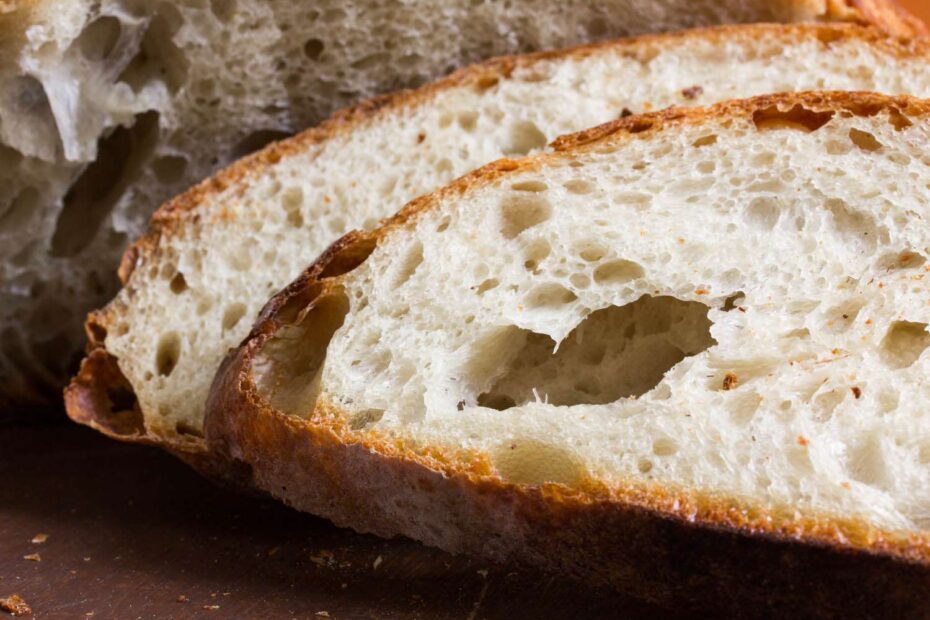
Have you ever wondered why a simple shaggy mess of flour and water transforms into a silky, elastic dough that rises into a majestic loaf of bread? This culinary magic isn’t just luck; it is the fascinating science of gluten development, the invisible backbone of almost every bread you love.
In this article, we will dive deep into the world of flour and water. We’ll explore what gluten actually is, how it forms, and why the way you handle your dough changes everything from the crust to the crumb. Whether you are a beginner baker or a seasoned sourdough enthusiast, understanding this process will give you total control over your kitchen creations.
By the end of this guide, you’ll know how to manipulate gluten to get exactly the texture you want. We are going to transition from the microscopic chemistry of proteins to the tactile joy of kneading, ensuring your next baking session is a resounding success.
1. The Chemistry of the “Invisible Web”
Gluten doesn’t actually exist inside a bag of flour. Instead, flour contains two dormant proteins called glutenin and gliadin. The moment you add water, these two proteins wake up, find each other, and begin to bond. Think of them as individual Lego bricks that, when wet, suddenly gain the ability to snap together into long, complex chains.
This relevance cannot be overstated: without this protein bond, your bread would be a flat, dense pancake. Glutenin provides the elasticity (the ability of the dough to snap back), while gliadin provides the extensibility (the ability to stretch without tearing). Together, they create an elastic web that acts like a balloon, capable of holding the gases produced by yeast.
To visualize this, imagine a net. If the net is weak or has holes, the air will escape. A well-developed gluten network is a fine-mesh net that traps carbon dioxide, allowing the bread to expand and “spring” in the oven. This is why high-protein flours, like bread flour, produce taller loaves than low-protein cake flours.
2. Hydration: The Catalyst for Structure
Water is much more than just a wet ingredient; it is the medium that allows proteins to move and link up. In the baking world, we often talk about hydration levels (the ratio of water to flour). High-hydration doughs, like Ciabatta, often have a more open, “holey” crumb because the proteins can move more freely to form strong bonds.
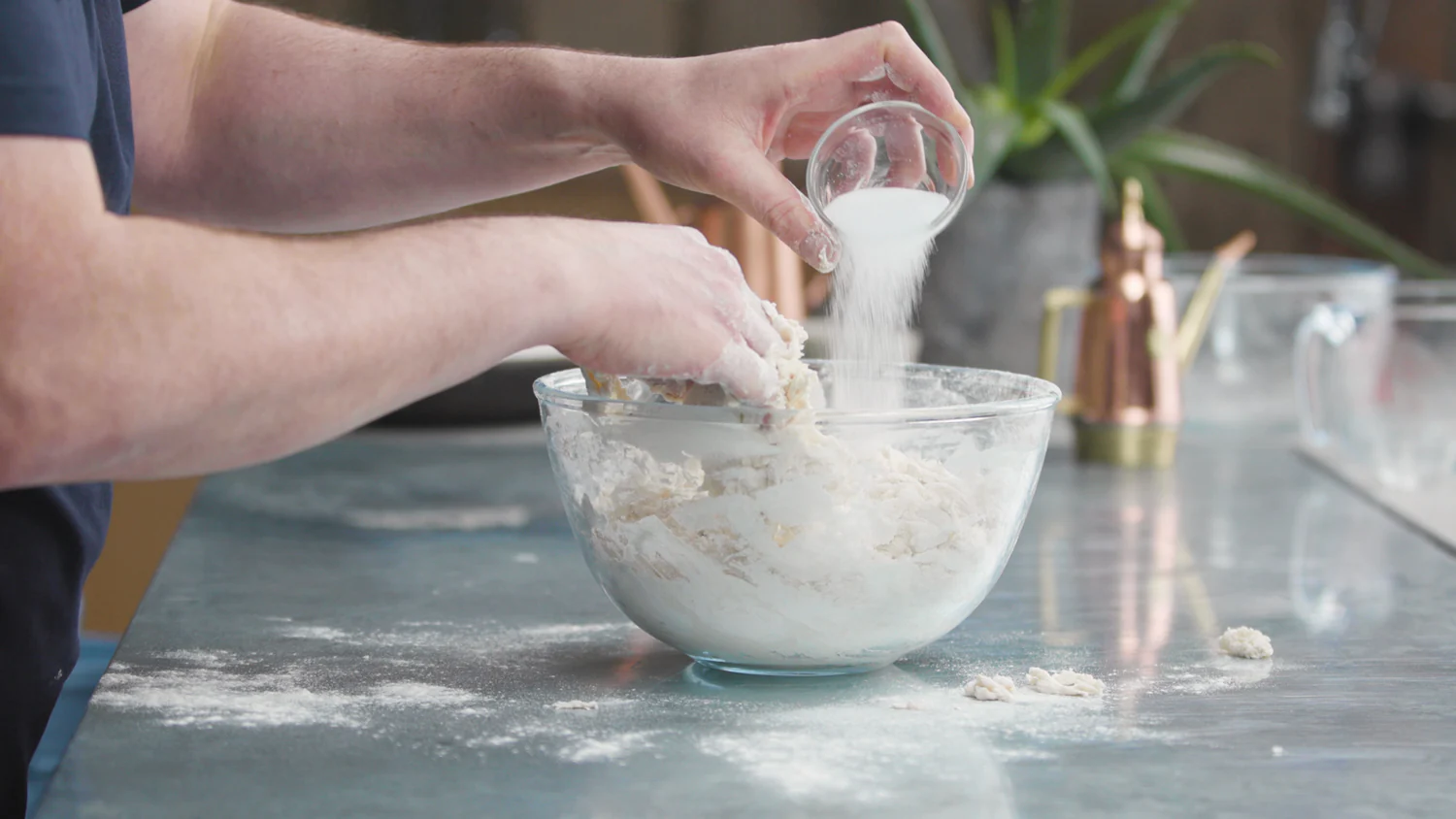
If you’ve ever struggled with a dough that feels like a brick, it might simply be too dry. Adding water allows the glutenin and gliadin to slide past one another and connect. For a practical tip at home, try the autolyse method: mix only your flour and water and let it sit for 30 minutes before adding salt or yeast.
This simple rest period allows the flour to fully hydrate, and the gluten begins to develop on its own without you even touching it. You’ll notice the dough becomes significantly smoother and more elastic just by sitting there. This brings concrete benefits: less physical kneading time and a more organized dough structure.
3. Kneading: Organizing the Chaos
If hydration creates the gluten bonds, kneading is what organizes them. Initially, the gluten strands are tangled and messy, like a bowl of discarded yarn. When you knead, you are physically stretching and aligning those strands into neat, parallel lines. This creates a much stronger and more sophisticated structure.
Think of it like building a bridge. If you throw steel beams in a pile, they won’t hold much weight. But if you weld them together in a specific geometric pattern, they can support a massive highway. Kneading is the welding process for bread. As you push and fold, you are reinforcing the “beams” of your dough.
Common kneading techniques include:
-
The Classic Fold: Pushing the dough away with the heel of your hand.
-
The Slap and Fold: Great for wet, sticky doughs.
-
Stretch and Folds: Used often in sourdough to build strength gently over time.
As the dough becomes more organized, it will stop sticking to your hands and start to feel like a smooth, soft earlobe. This is a sign that your “yarn” is now a finely woven fabric, ready to move to the next stage of fermentation.
4. The “Windowpane Test” and Proper Handling
How do you actually know when the gluten is developed enough? You don’t have to guess. The most reliable method used by professional bakers is the Windowpane Test. Take a small piece of dough and gently stretch it between your fingers. If you can stretch it thin enough to see light through it without it breaking, the gluten is fully developed.
If the dough tears immediately, it needs more work or more rest. However, be careful not to over-knead, especially if using a stand mixer. Over-kneaded dough becomes tough, rubbery, and eventually breaks down into a sticky mess that cannot be recovered. In hand-kneading, this is almost impossible to do, but machines are powerful.
Practical Recommendation: If your dough feels tight and keeps snapping back when you try to shape it, stop! Cover it and let it rest for 10 minutes. This allows the gluten to relax. Just like an athlete needs a break between sprints, your gluten needs a break between stretches to remain pliable and easy to work with.
5. Factors That Inhibit Gluten (Fat and Salt)
Not every ingredient is a friend to gluten. While water builds it, fats like butter, oil, and egg yolks are “shorteners.” They literally coat the protein strands and prevent them from bonding, resulting in a “short” texture—this is why brioche is tender and flaky rather than chewy and elastic like a baguette.
Salt, on the other hand, is a strengthener. It tightens the gluten network and makes it more stable. This is why you should never forget the salt! Without it, the dough would rise too quickly and collapse. Understanding these interactions allows you to play with recipes. Want a softer sandwich bread? Add a little milk or butter. Want a chewy pizza crust? Stick to flour, water, salt, and yeast.
| Ingredient | Effect on Gluten | Resulting Texture |
| Water | Encourages bonding | Elastic and airy |
| Butter/Oil | Inhibits bonding | Tender and soft |
| Salt | Tightens/Strengthens | Structured and chewy |
6. The Zen of Dough Development
Baking bread is a lesson in patience. In our fast-paced world, we often want to rush the process, but gluten development is as much about time as it is about effort. Long, cold fermentations in the refrigerator not only develop incredible flavor but also allow the gluten to strengthen in a way that intense kneading never could.
There is something deeply reflective about feeling a dough change under your hands. It starts as a sticky, frustrating mass and ends as a living, breathing entity. This transition reminds us that with the right environment (hydration), the right guidance (kneading), and enough patience (time), something beautiful and nourishing is created.
As you move toward your next bake, remember that you aren’t just following a recipe; you are managing a biological and chemical process. The more you “listen” to the dough and understand what the gluten is doing, the more consistent and delicious your bread will become.
Conclusion
Understanding gluten development is the “aha!” moment for every home baker. We’ve explored how protein chemistry forms the foundation, how hydration acts as a catalyst, and how kneading organizes the dough into a strong, gas-trapping machine. We also touched on how fats can soften the structure and how the windowpane test serves as your ultimate guide.
Gluten isn’t something to fear—it is a tool to be mastered. By applying these insights, you can move away from rigid recipes and start baking with intuition. Whether you are aiming for a crispy sourdough or a buttery roll, you now have the knowledge to manipulate the dough to your will.
What is your biggest challenge when working with bread dough? Do you struggle with stickiness, or do your loaves often turn out denser than you’d like? Leave a comment below and let’s discuss your baking journey!

Thayná Alves is an influential digital content creator who has carved out a significant space in the realms of technology, finance, and entrepreneurship. Through her blog, Newbacker.com , she stands out as an authentic and accessible voice for individuals seeking practical information about investments, innovation, and emerging trends in the financial market.