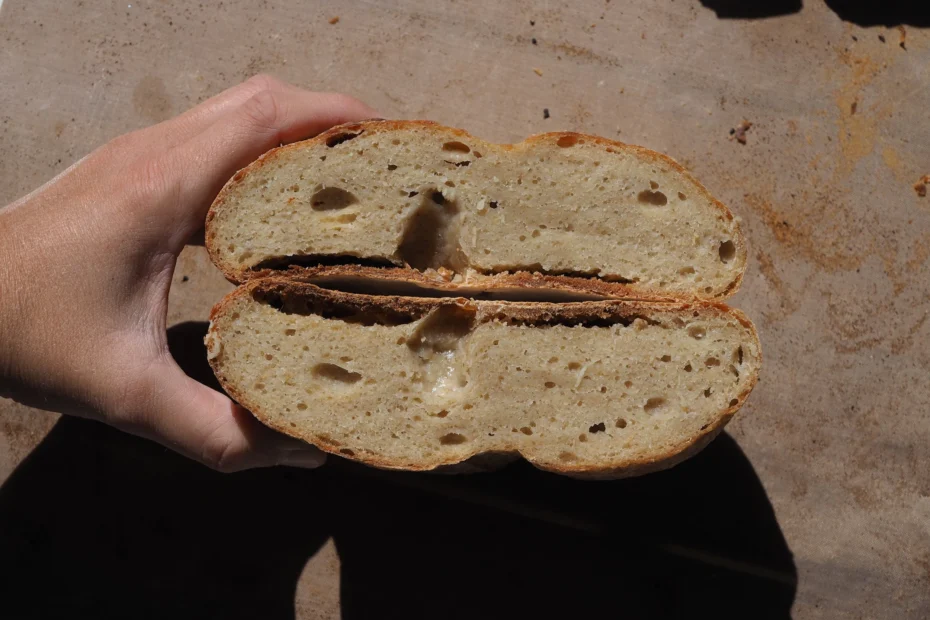
There is nothing quite like the anticipation of baking your own bread, waiting for that golden, pillowy loaf to emerge from the oven, only to find a dense, flat brick instead. If you have ever stared at a deflated loaf of bread and wondered where it all went wrong, you are definitely not alone. It is a frustrating rite of passage that every single baker faces at some point on their culinary journey.
Baking bread is a beautiful mix of science and art, where minor details can completely change your results. When a loaf turns out flat, it is simply your dough trying to tell you that something in the process was slightly out of balance. The good news is that bread baking is incredibly forgiving once you understand the basic mechanics behind it.
In this guide, we will break down the mystery of the flat loaf into simple, manageable pieces. We will explore the most common culprits behind a failed rise, from the health of your yeast to the way you handle the dough. By the end of this article, you will have a practical checklist to rescue your next bake and achieve that perfect, airy rise every time.
1. The Living Ingredient: Is Your Yeast Actually Alive?
To solve the mystery of the flat loaf, we must first look at the heartbeat of your bread: the yeast. Yeast is not just a powdery ingredient from a packet; it is a living organism that needs the right environment to thrive. If your yeast is old, expired, or damaged, your bread simply will not have the power to rise.
+---------------------+---------------------------------------------------------+
| Water Temperature   | Yeast Condition                                         |
+---------------------+---------------------------------------------------------+
| Below 35°C (95°F)   | Too cold; yeast remains sluggish or dormant             |
| 38°C–43°C (100-110°F)| Perfect zone; yeast activates beautifully               |
| Above 55°C (130°F)  | Too hot; yeast is permanently damaged                   |
+---------------------+---------------------------------------------------------+
A very common mistake is using water that is far too hot when mixing your dough. Imagine stepping into a scalding hot shower—it is not pleasant for you, and it is fatal for your yeast. If the liquid goes above the temperature listed in the table above, you will inadvertently damage the yeast before it even has a chance to start working.
Pro Tip: If you are unsure whether your yeast is still active, always proof it first. Mix it in a small bowl with warm water and a pinch of sugar. If it doesn’t become frothy and bubbly within ten minutes, it is time to buy a fresh batch.
2. The Goldilocks Dilemma: Finding the Sweet Spot for Proofing
Proofing is the stage where your dough rests and ferments, allowing the yeast to create gases that stretch the dough and make it rise. However, timing is everything during this phase. Leaving your dough to rise for too long, a mistake known as over-proofing, is one of the leading causes of flat bread.
When dough over-proofs, the yeast consumes all its available food and produces too much gas. The gluten structure stretches to its absolute limit, much like a balloon that has been inflated just a bit too much. Once it hits the high heat of the oven, that weakened structure collapses inward, leaving you with a cratered top.
-
Under-proofing: The dough hasn’t built enough gas, resulting in a dense, heavy loaf.
-
Over-proofing: The dough stretches too far, loses its structural integrity, and collapses.
-
The Poke Test: Gently press your finger about half an inch into the dough. If the indentation springs back slowly and leaves a slight dent, it is perfectly ready for the oven.
3. The Structural Backbone: Gluten and the Importance of Kneading
If yeast is the engine of your bread, gluten is the body of the car. Gluten is a network of proteins that forms when flour meets water, creating an elastic web that traps the gases produced by your yeast. Without a strong gluten structure, those gases will simply escape into the air, causing your loaf to pancake.
Under-kneading is a very frequent culprit behind a weak structural backbone. Think of kneading as a workout for your dough; it strengthens the protein bonds and gives the dough its shape and elasticity. If you stop kneading too early, your dough will be loose, sticky, and completely unable to hold its form as it expands.
On the other hand, choosing the right flour makes a massive difference in how this structure develops. All-purpose flour can work, but bread flour contains a higher percentage of protein, which naturally builds a much stronger network. Transitioning from weak dough to strong dough is easy once you know what visual cues to look for.
4. Oven Metrics: The Silent Impact of Temperature and Steam
You might have mixed the perfect dough, kneaded it beautifully, and proofed it to perfection, but the battle isn’t won until the baking is done. Your oven temperature plays a massive role in what bakers call “oven spring.” This is the sudden, final burst of rising that happens during the first ten minutes of baking.
If your oven temperature is too low, the yeast will not get that immediate wake-up call to expand rapidly. Instead, the dough will slowly warm up, melt out of shape, and dry out before it can reach its full height. Most domestic ovens are notoriously inaccurate, often running cooler than the dial actually indicates.
How Steam Rescues Your Loaf:
[Moist Air in Oven] -> [Keeps Dough Surface Pliable] -> [Maximum Expansion]
[Dry Air in Oven]   -> [Forms Early Hard Crust]     -> [Trapped, Flat Loaf]
Furthermore, moisture is a secret weapon used by professional bakers worldwide. Introducing steam into your oven during the initial stages of baking keeps the outer skin of the dough soft and stretchy. This allows the loaf to expand fully without ripping or being held back by a premature, hard crust.
5. The Kitchen Climate: Navigating Ambient Temperature and Humidity
It is easy to forget that your kitchen is a shifting environment that directly interacts with your baking process. Yeast is highly sensitive to the surrounding room temperature and humidity levels. A recipe that tells you to “let the dough rise for one hour” is making a broad assumption about the climate in your home.
During chilly winter months, your kitchen counters might be cold enough to slow yeast activity down to a crawl. In this scenario, one hour of resting might leave your dough entirely under-proofed. Conversely, a hot and humid summer day can accelerate the process drastically, pushing your dough into over-proofed territory before you even realize it.
Instead of watching the clock, you should always watch the dough itself. Look for visual milestones, such as the dough doubling in size, feeling airy to the touch, and looking slightly domed on top. Learning to adapt to your environment will completely transform your consistency as a baker.
6. The Salt and Scale Secret: Precision in Your Measurements
Baking is far closer to a chemistry experiment than a casual weeknight dinner. While you can easily eyeball the garlic and spices in a pasta sauce, doing the same with bread ingredients is a recipe for disaster. The relationship between flour, water, salt, and yeast relies on very precise ratios.
Take salt, for example. It does far more than just bring out the delicious, savory flavor of the grain. Salt acts as a natural brake for yeast, controlling the fermentation speed so the dough doesn’t rise too quickly and weaken.
-
Too little salt: The yeast runs wild, over-proofs rapidly, and creates a fragile structure that collapses.
-
Too much salt: The yeast is severely dehydrated and retarded, resulting in a dense, heavy brick.
The absolute best way to eliminate this variable is to invest in a simple digital kitchen scale. Measuring your ingredients in grams rather than relying on volume cups ensures perfect accuracy every single time. A cup of flour can vary drastically in weight depending on how tightly packed it is, but a gram is always a gram.
7. Troubleshooting Checklist: Your Quick Fix for the Next Bake
Before you start your next baking adventure, let’s consolidate everything we have learned into a practical, easy-to-use checklist. Whenever a loaf doesn’t turn out quite right, walk through these steps to identify exactly where the process went off course.
+---------------------------+-------------------------------------------------------+
| Checkpoint                | Diagnostic Action                                     |
+---------------------------+-------------------------------------------------------+
| 1. Yeast Vitality         | Did the yeast foam in warm water before mixing?       |
| 2. Water Temperature      | Was the water lukewarm to the touch, not hot?         |
| 3. Kneading Consistency   | Did the dough pass the translucent windowpane test?   |
| 4. Proofing Time          | Did the dough pass the gentle finger-poke test?       |
| 5. Oven Environment       | Is an independent thermometer verifying the heat?     |
+---------------------------+-------------------------------------------------------+
As you can see, fixing a flat loaf is rarely about changing your recipe entirely. It is almost always about tuning into the subtle details of execution. By paying closer attention to these variables, you will quickly develop an intuitive feel for the dough.
Conclusion
Baking bread is a deeply rewarding journey filled with continuous learning, delightful aromas, and occasional missteps. A flat loaf is never a failure; it is simply a valuable stepping stone toward mastering the craft. Every master baker you admire has created their fair share of dense, unrisen bricks along the way.
Now that you understand the crucial roles played by yeast health, proofing times, gluten structure, and temperature, you have all the tools necessary to conquer the flat loaf dilemma. Baking is a skill that grows with patience, practice, and a little bit of curiosity. Don’t let a minor setback keep you away from the oven.
Dust off your counter, measure your ingredients with care, and give your next loaf another try with renewed confidence. You will find that nothing beats the satisfaction of slicing into a beautifully risen, homemade loaf that you created entirely from scratch.
What about you? Have you ever had a loaf turn completely flat, or do you have a favorite trick to get the perfect rise? Let us know in the comments below, and feel free to share this guide with a fellow baker who might need a helping hand!

Thayná Alves is an influential digital content creator who has carved out a significant space in the realms of technology, finance, and entrepreneurship. Through her blog, Newbacker.com , she stands out as an authentic and accessible voice for individuals seeking practical information about investments, innovation, and emerging trends in the financial market.