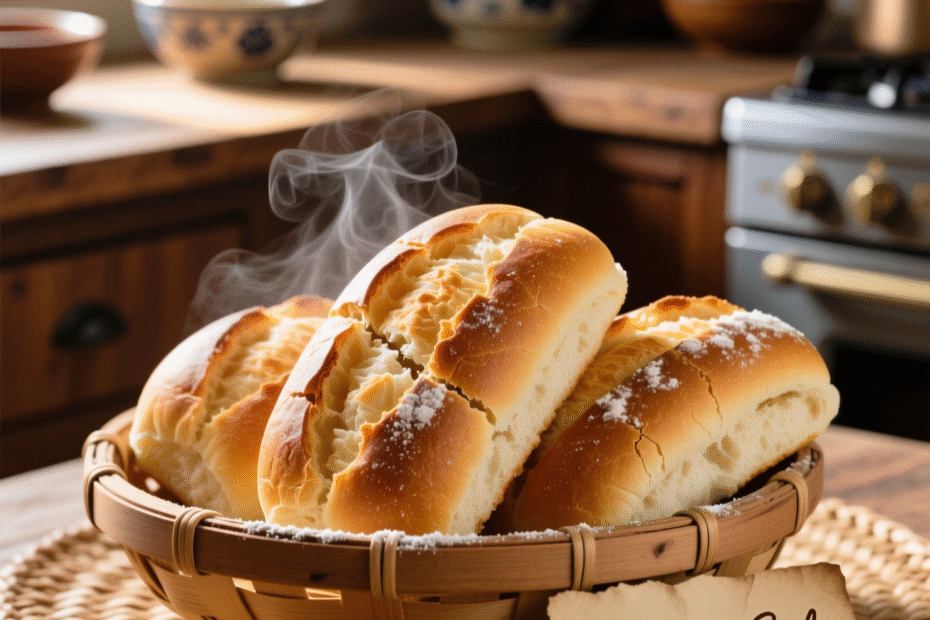
There’s a reason the aroma of freshly baked pan de sal stops Filipinos in their tracks—no matter their age, background, or how far they’ve wandered from home. These humble, golden-brown rolls are more than just breakfast; they’re a warm hug from childhood, a taste of community, and a delicious contradiction: slightly sweet, delightfully crisp on the outside, and soft as a cloud within.
In this article, we’ll unwrap the story behind pan de sal—the Philippines’ beloved “bread of salt” that’s anything but salty. You’ll discover its fascinating history, why its signature coating is so iconic, and how this everyday staple carries deep cultural meaning.
We’ll even guide you through baking your own batch at home, with practical tips for nailing that perfect texture. Whether you’re a curious foodie, a home baker looking for a new challenge, or someone reconnecting with Filipino roots, get ready to fall in love with pan de sal all over again.
A National Treasure in Every Bite: The Origins of Pan de Sal
You might be surprised to learn that pan de sal—whose name literally translates to “bread of salt”—isn’t salty at all. In fact, it’s subtly sweet, with a gentle richness that pairs perfectly with morning coffee or a slab of cold butter. So how did it earn its misleading name? The answer lies in its colonial past.
When Spanish colonizers arrived in the Philippines in the 16th century, they brought with them European baking techniques and wheat flour—ingredients previously unknown in the archipelago, where rice was (and still is) the staple grain.
Early versions of pan de sal were indeed made with salted dough, modeled after Spanish breads. But over time, local bakers adapted the recipe to suit Filipino tastes, swapping salt for sugar and using local coconut oil or shortening.
What emerged was a uniquely Filipino creation: a roll that looked European but tasted unmistakably homegrown.
By the American colonial period in the early 1900s, commercial bakeries began mass-producing pan de sal, and it quickly became a breakfast staple across social classes. Today, it’s found in every panaderia (Filipino bakery), from bustling Manila neighborhoods to quiet provincial towns. Its affordability, simplicity, and comforting flavor have made it a symbol of everyday resilience and joy—a small luxury anyone can enjoy.
Why the Crispy Coating Matters More Than You Think
That distinctive golden-brown, slightly crunchy exterior isn’t just for looks—it’s the soul of pan de sal. But here’s the secret: that crunch comes from breadcrumbs, not sugar or glaze. After the dough balls are shaped, they’re rolled in fine, dry breadcrumbs (traditionally made from stale pan de sal itself!), then baked until puffed and golden.
This technique does more than add texture. The breadcrumb coating creates a delicate crust that contrasts beautifully with the pillowy interior, offering a sensory experience that plain rolls simply can’t match. It also helps lock in moisture, keeping the bread soft for hours—even without preservatives.
For home bakers, replicating this coating is easier than you think. Store-bought panko or homemade breadcrumbs work well, though traditionalists swear by pinipig-style crumbs (lightly toasted and ground). Just remember: the drier the crumbs, the crisper the finish. And don’t skip the egg wash—it gives the rolls their signature sheen and helps the crumbs stick.
Pro tip: For an extra touch of nostalgia, try using leftover pan de sal from yesterday’s batch. Pulse it in a food processor, dry it in a low oven, and you’ve got authentic, zero-waste coating!
More Than Just Bread: Pan de Sal as Cultural Comfort Food
To call pan de sal “just a roll” is like calling adobo “just chicken.” It’s a vessel for memory, ritual, and connection. For many Filipinos, mornings begin with the sound of a panaderia bell and the sight of a plastic bag filled with warm rolls—often bought by a parent on the way home from an early shift.
Children dip pan de sal in hot chocolate. Students grab one on the way to school. Office workers pair it with instant coffee during break time. During fiestas or family gatherings, it’s not uncommon to see trays of pan de sal alongside more elaborate dishes—proof that simplicity has its place at every table.
Even in times of hardship, pan de sal offers comfort. During typhoons or economic downturns, it remains one of the most affordable sources of sustenance. Its enduring presence speaks to Filipino ingenuity: making something nourishing, beautiful, and joyful out of very little.
And let’s not forget its role in diaspora communities. Overseas Filipinos often cite pan de sal as one of the foods they miss most. Baking it at home becomes an act of cultural preservation—a way to pass down flavors, stories, and identity to the next generation.
Baking Your Own Pan de Sal: A Step-by-Step Guide for Beginners
Ready to bring the panaderia experience into your kitchen? While traditional recipes vary by region and family, the basic method remains consistent. Here’s a beginner-friendly approach that yields soft, slightly sweet rolls with that iconic crisp coating.
Ingredients you’ll need:
- 4 cups bread flour (or all-purpose)
- 1/3 cup sugar
- 1 tsp salt
- 2 ¼ tsp active dry yeast (1 packet)
- 1 cup warm milk
- 1 large egg
- ¼ cup butter or margarine, softened
- 1 cup fine breadcrumbs (for coating)
- 1 egg beaten with 1 tbsp water (for egg wash)
Steps:
- Activate the yeast: Mix warm milk (not hot—around 110°F/43°C) with sugar and yeast. Let sit for 5–10 minutes until frothy.
- Make the dough: In a large bowl, combine flour and salt. Add the yeast mixture, egg, and softened butter. Knead for 8–10 minutes until smooth and elastic.
- First rise: Place dough in an oiled bowl, cover, and let rise in a warm place for 1–1.5 hours, or until doubled.
- Shape the rolls: Punch down the dough. Divide into 16–20 pieces. Roll each into a smooth ball.
- Coat and proof: Roll each ball in breadcrumbs, place on a baking sheet, and let rise again for 30–45 minutes.
- Bake: Brush with egg wash and bake at 375°F (190°C) for 15–18 minutes, until golden.
Baker’s note: Humidity affects dough! If your kitchen is dry, cover the rolls with a damp cloth during proofing. And don’t overbake—even one extra minute can dry them out.
Modern Twists and Creative Variations to Try Today
While classic pan de sal will always have a special place, today’s bakers are giving it fun, modern upgrades—without losing its soul. In Manila’s trendy cafes, you’ll find ube pan de sal swirled with purple yam, matcha versions dusted with green tea powder, or even savory takes stuffed with cheese and longganisa (Filipino sausage).
At home, you can experiment too:
- Stuff it: Flatten a dough ball, add a cube of kesong puti (Filipino white cheese) or a spoonful of sweetened mung bean paste, then seal and shape.
- Go global: Swap breadcrumbs for crushed cornflakes, sesame seeds, or even coconut flakes for a tropical twist.
- Make it vegan: Use plant-based milk, flax egg, and coconut oil—many Filipino bakers already do!
These innovations aren’t about replacing tradition, but expanding it. They show that pan de sal is a living recipe—one that evolves with each generation while keeping its heart intact.
And don’t worry: even if your first batch isn’t perfect, it’ll still taste like love. That’s the magic of pan de sal—it forgives imperfect shaping or slightly uneven browning. What matters is the intention behind it.
A Symbol of Filipino Joy in Simple Things
In a world obsessed with extravagance, pan de sal reminds us of the beauty in simplicity. It doesn’t need truffle oil or gold leaf to be special. Its power lies in its accessibility, its ability to turn an ordinary morning into something warm and meaningful.
This small roll embodies a core Filipino value: pagmamalasakit—a deep, quiet care for others. It’s in the mother who wakes before dawn to buy fresh pan de sal for her kids. It’s in the tita who brings a bag to her neighbor “just because.” It’s in the immigrant who mails a care package with a recipe scribbled on the back of an envelope.
Pan de sal teaches us that joy doesn’t require perfection—only presence. And in a time when many feel disconnected, that’s a lesson worth savoring.
Final Thoughts: Bake, Share, and Keep the Tradition Alive
We’ve journeyed from Spanish galleons to modern kitchens, explored the science behind that crispy crust, and celebrated pan de sal as both food and feeling. At its core, this beloved roll is a testament to Filipino resilience, creativity, and warmth.
Whether you’re baking your first batch or rediscovering a childhood favorite, remember: pan de sal isn’t just about ingredients—it’s about connection. So go ahead, mix that dough. Share the rolls with someone you care about. Tell them the story behind it.
And if you try making pan de sal at home, we’d love to hear how it turned out! Did you stick to the classic recipe, or add your own twist? Share your experience in the comments below—or tag a friend who needs a taste of Filipino comfort today.
Because in the end, the best pan de sal isn’t the one that looks perfect—it’s the one shared with love.

Thayná Alves is an influential digital content creator who has carved out a significant space in the realms of technology, finance, and entrepreneurship. Through her blog, Newbacker.com , she stands out as an authentic and accessible voice for individuals seeking practical information about investments, innovation, and emerging trends in the financial market.