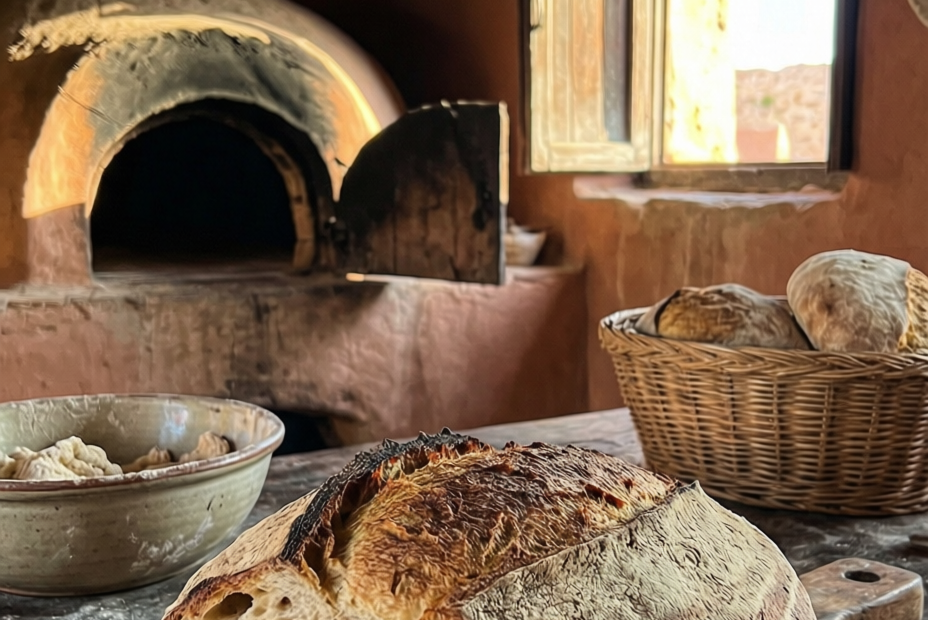
There’s something magical about the scent of freshly baked bread—especially when it rises from a centuries-old clay oven tucked into a sun-drenched Tunisian courtyard. That aroma isn’t just comfort; it’s history, heritage, and heart all rolled into one golden crust. Welcome to the world of Tabouna, Tunisia’s rustic flatbread that carries the soul of North African tradition in every bite.
In this article, we’ll explore the origins, cultural significance, and unique preparation of Tabouna—a humble yet extraordinary bread that has nourished generations. You’ll discover why it’s more than just food: it’s a symbol of community, resilience, and culinary artistry.
We’ll also share practical tips for making (or appreciating) Tabouna at home, even if you don’t have a traditional clay oven. Whether you’re a food lover, a cultural explorer, or simply curious about global bread traditions, this journey into Tunisian kitchens promises warmth, flavor, and a deeper connection to the rhythms of everyday life in the Maghreb.
The Roots of Tabouna: A Bread Steeped in History
Long before modern bakeries lined Tunisian streets, families gathered around tabouns—domed clay ovens built into the earth—to bake their daily bread. Tabouna emerged from this communal practice, shaped by scarcity, climate, and ingenuity. Unlike fluffy European loaves, Tabouna is dense, slightly chewy, and often unleavened or minimally leavened, reflecting its origins in rural households where ingredients were simple and resources limited.
Historically, Tabouna was more than sustenance—it was a ritual. Women would prepare the dough at dawn, often using semolina or coarse wheat flour, water, salt, and sometimes a touch of olive oil. The timing mattered: baking happened early to avoid the midday heat, and neighbors often shared ovens, turning bread-making into a social event. This tradition persists in villages across central and southern Tunisia, where the taboun remains a fixture in courtyards and family compounds.
What makes Tabouna historically significant is its resilience. Despite colonization, urbanization, and industrial food production, this bread has endured—not as a museum piece, but as a living practice. It represents a culinary continuity that connects modern Tunisians to their ancestors, offering a taste of authenticity in an increasingly homogenized food landscape.
Why Tabouna Matters Today: Simplicity in a Complex World
In our fast-paced era of instant meals and ultra-processed snacks, Tabouna stands as a quiet rebellion. Its beauty lies in its minimalism: few ingredients, no fancy equipment, and zero waste. Every element serves a purpose, and every step—from kneading to baking—invites presence and patience.
For today’s home cooks, Tabouna offers a refreshing return to basics. You don’t need a stand mixer or specialty flours. In fact, many traditional recipes use coarse semolina (smida) or a blend of whole wheat and white flour, both widely available. The result? A bread with a nutty depth, a satisfying bite, and a crust that crackles beautifully when torn apart.
Moreover, Tabouna aligns with growing interest in slow food, sustainability, and mindful eating. Because it’s typically made in small batches and consumed fresh, it reduces reliance on preservatives and packaging. It also encourages communal cooking—imagine sharing the task with family or friends, much like Tunisian women have done for centuries.
Even if you can’t replicate a true taboun oven, you can capture Tabouna’s spirit using a cast-iron skillet, pizza stone, or even a covered Dutch oven. The key isn’t perfection—it’s intention. And in a world obsessed with efficiency, choosing to make bread slowly is itself a radical act of care.
The Art of the Taboun Oven: Fire, Earth, and Time
Ask any Tunisian grandmother about Tabouna, and she’ll likely gesture toward the taboun—the earthen oven that gives the bread its name and character. Shaped like a beehive and built from clay, straw, and sand, the taboun isn’t just a cooking tool; it’s a thermal masterpiece. Heated with olive wood or dried branches, it retains heat evenly, creating the perfect environment for baking flatbreads with a crisp exterior and tender interior.
The process is almost meditative. Once the fire dies down to glowing embers, the ashes are swept aside, and the dough rounds are slapped directly onto the hot inner walls. Within minutes, they puff slightly, char in spots, and develop a smoky perfume that no electric oven can mimic. This method requires skill—timing, temperature judgment, and a steady hand—but it’s also deeply intuitive, passed down through observation and practice.
To understand Tabouna fully, you must appreciate the taboun. It’s not unlike a tandoor in India or a cob oven in rural Europe—each reflects a culture’s relationship with fire, earth, and community. In Tunisia, the taboun often sits at the heart of the home, both literally and symbolically. On feast days like Eid or weddings, extra batches are baked to share with neighbors, reinforcing bonds through bread.
While most of us won’t build a clay oven in our backyards, we can honor this tradition by slowing down, using real fire when possible (even a grill!), and treating bread-making as a craft rather than a chore.
Making Tabouna at Home: A Practical Guide for Modern Kitchens
You don’t need a taboun to enjoy authentic Tabouna—just a little creativity and respect for the process. Here’s how to bring this Tunisian treasure into your kitchen:
Ingredients (for 4–6 flatbreads):
- 2 cups coarse semolina or a mix of semolina and all-purpose flour
- ¾ cup warm water (adjust as needed)
- 1 tsp salt
- 1 tbsp olive oil (optional, for richness)
Method:
- Mix and knead: Combine flour and salt. Gradually add water and olive oil, kneading until smooth and elastic (about 8–10 minutes by hand).
- Rest: Cover and let the dough rest for 30–60 minutes. This relaxes the gluten and improves texture.
- Shape: Divide into balls, then flatten into ¼-inch thick rounds with a rolling pin or your palms.
- Bake: Heat a cast-iron skillet or griddle over medium-high heat. Cook each bread for 2–3 minutes per side, until golden brown with light char spots. For extra authenticity, finish under a broiler for 1–2 minutes to mimic oven puffing.
Pro Tips:
- Don’t over-flour your surface—Tabouna should be slightly sticky for better adhesion to hot surfaces.
- Serve immediately with olive oil, harissa, or fresh cheese like jben (Tunisian goat cheese).
- Store wisely: Tabouna is best eaten fresh but can be reheated in a dry pan or toaster oven to revive its texture.
This simplified version won’t replicate the exact smokiness of a taboun, but it captures the essence: honest, hearty, and deeply satisfying.
Beyond the Plate: Tabouna as Cultural Heritage
Tabouna is more than food—it’s a vessel of identity. In Tunisia, bread is sacred. The Arabic word for bread, khobz, appears in proverbs, songs, and daily expressions. To waste bread is considered disrespectful; to share it is an act of generosity. Tabouna, in particular, embodies resilience and resourcefulness—qualities honed through droughts, economic shifts, and political change.
Consider this: during Tunisia’s 2011 revolution, street vendors kept selling Tabouna even as protests raged. Why? Because people still needed to eat—and bread remained a unifying constant. Today, young Tunisian chefs are reimagining Tabouna in upscale restaurants, pairing it with labneh or using it as a base for modern mezze, proving that tradition can evolve without losing its soul.
Globally, Tabouna joins a family of flatbreads—like Moroccan msemen, Lebanese markouk, or Indian roti—that tell stories of place and people. By learning about (and making) Tabouna, we participate in a cross-cultural dialogue about what it means to nourish others with simplicity and grace.
Conclusion: Breaking Bread, Building Bridges
Tabouna may seem like a simple flatbread, but it carries layers of meaning—historical, cultural, and emotional. From its origins in clay ovens to its role in daily Tunisian life, it reminds us that food is never just fuel. It’s memory, community, and continuity.
We’ve explored how Tabouna emerged from necessity yet became a symbol of identity; how its minimalist recipe offers a counterpoint to modern excess; how the taboun oven transforms fire and flour into something transcendent; and how you can honor this tradition in your own kitchen—even without a clay dome in your backyard.
So why not give it a try? Mix the dough, feel its texture, smell it as it browns. In doing so, you’re not just baking bread—you’re connecting with a centuries-old practice that values slowness, sharing, and sincerity.
Have you ever tried Tunisian bread—or baked flatbread in a skillet? Share your experience in the comments below! And if this article inspired you, pass it on to a fellow food lover. Sometimes, the simplest recipes carry the deepest stories.

Thayná Alves is an influential digital content creator who has carved out a significant space in the realms of technology, finance, and entrepreneurship. Through her blog, Newbacker.com , she stands out as an authentic and accessible voice for individuals seeking practical information about investments, innovation, and emerging trends in the financial market.